
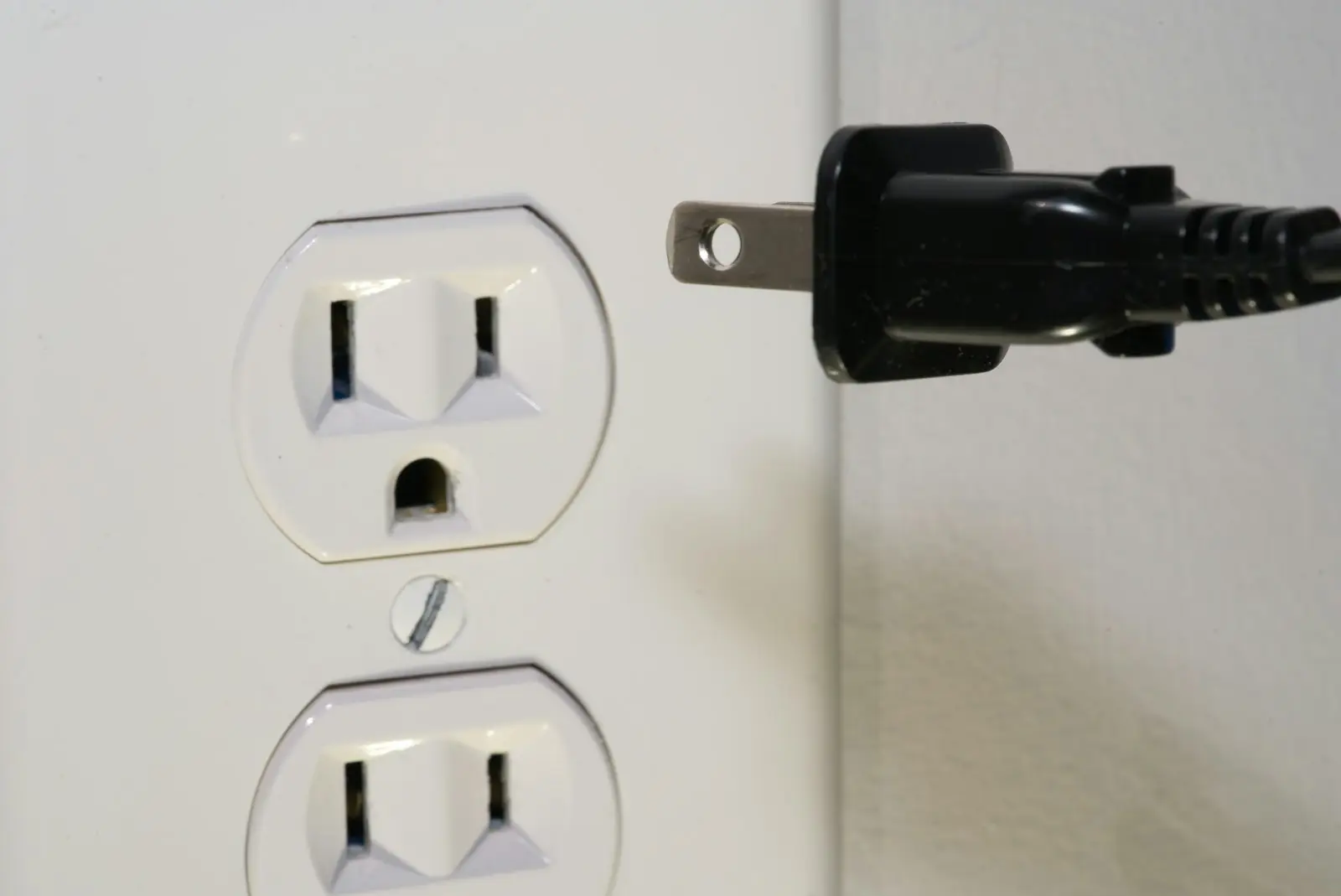

A cold plunge with a chiller is a refrigerator for 100 gallons of water. It has a compressor, a pump, and controls, and it needs power all day, every day.
Most plug into household voltage, which sounds simple. The details still matter: some need a circuit of their own, and two popular models don’t publish their power draw at all. This article goes through the requirements by model. For chillers, filtration, and tub types, start with the cold plunge buying guide.
Short answer: every chiller plunge we list runs on 120V. Plan on a dedicated 15A circuit with a GFCI-protected outlet within reach of the cord, and get the nameplate amps from the maker before an electrician quotes.
What each model asks for
| Cold plunge | Chiller | Stated requirement |
|---|---|---|
| Nurecover Plunge + Chiller | 0.3 HP | Standard household outlet |
| Renu Cold Stoic 2.0 | 0.25 HP, 450W | 120V/15A circuit |
| Plunge Original | Not stated | Dedicated 120V/15A circuit |
| Renu Cold Stoic 3.0 | 0.5 HP | Dedicated 120V/15A circuit |
| Renu Vero | 0.8 HP | Dedicated 120V/15A circuit |
| Renu Siberian Pro | 0.8 HP | 120V/15A standard circuit |
| Nordic Wave Viking Premier | Not stated | Standard household outlet; amps not published |
| Nordic Wave Viking XL | Not stated | Standard household outlet; amps not published |
From manufacturer listings, checked September 2026.
What “dedicated” means
A dedicated circuit has one breaker and one outlet, and nothing else on it. The reason is the compressor. It runs for long stretches, and it pulls a brief surge each time it starts. If a freezer, a space heater, or a power tool shares the breaker, the combined load can trip it. Then the water warms up until someone notices.
A normal outlet on a lightly used circuit may work. A garage or patio outlet often shares its breaker with other outlets, so check what else is on it. If the maker says dedicated, treat that as a requirement, since it can affect a warranty claim.
Horsepower is not watts
Here’s what the spec sheet won’t tell you. Makers quote chiller size in horsepower, which describes the compressor. It doesn’t tell you the watts on your bill or the amps on the breaker. Only one model in the table publishes watts: the Cold Stoic 2.0 at 450W, which is about 3.75A at 120V.
For the others, ask for the nameplate figures: running amps and, if they have it, startup amps. This matters most for the models that also heat. The Cold Stoic 3.0 and the Viking plunges warm the water to 104°F, and heating can draw more than cooling. Nordic Wave doesn’t publish the amperage for either Viking model, so get it in writing before you assume a shared outlet will do.
Run the numbers on running cost
Take the one published figure. A 450W chiller uses 0.45 kWh for each hour the compressor runs. At the 2026 US average of 18.34 cents per kWh, that is about 8 cents an hour.
If it ran all 24 hours, that would be 10.8 kWh and about $1.98 a day, or about $60 a month. It won’t. A chiller cycles off once the water reaches the set temperature, and how often it restarts depends on the insulation, the lid, the air temperature, and the sun. The Cold Stoic 2.0 has 4 inches of foam, which keeps the cycles short. Treat $60 as the ceiling for that model and expect less.
For a larger chiller with no published watts, you can’t do this sum. That is one more reason to ask.
Outdoors: GFCI and placement
The Electrical Safety Foundation International says hot tubs and the outlets near them should have GFCI protection. A plug-in cold plunge outdoors is the same situation: water, bare feet, and an outlet close by. Use a GFCI-protected outlet with a weatherproof cover.
Place the outlet where the cord reaches without crossing a walkway, and where splashes and drain water won’t run toward it. Keep the chiller’s air vents clear. A chiller pushed against a wall can’t shed heat and runs longer.
What an electrician needs from you
- The model and its nameplate amps.
- Whether the maker requires a dedicated circuit.
- Where the tub will sit and how far that is from the panel.
- Indoors or outdoors.
- Whether your panel has a spare breaker slot.
Most of the cost is the cable run. An outlet on the wall behind the panel costs far less than one at the far end of the yard.
If you’d rather skip the wiring
An ice-only tub needs no power at all. The trade-off is buying ice. If you plunge several times a week, compare a month of ice with the wiring quote and the chiller’s running cost before you decide.
To see how three chiller plunges compare on price and warranty, read the cold plunge comparison.
Bottom line: no 240V, but don’t treat it as a lamp. Give the chiller its own circuit, protect the outlet, and get the amps in writing.
Sources
- Electrical Safety Foundation International, “Outdoor Electrical Safety Check” booklet (2021): esfi.org
- U.S. Energy Information Administration, Electric Power Monthly, Table 5.6.A (residential average 18.34¢/kWh, June 2026 data), accessed October 1, 2026
- Plunge, Renu Therapy, Nordic Wave, and Nurecover listings (chiller size, power requirements), checked September 2026