
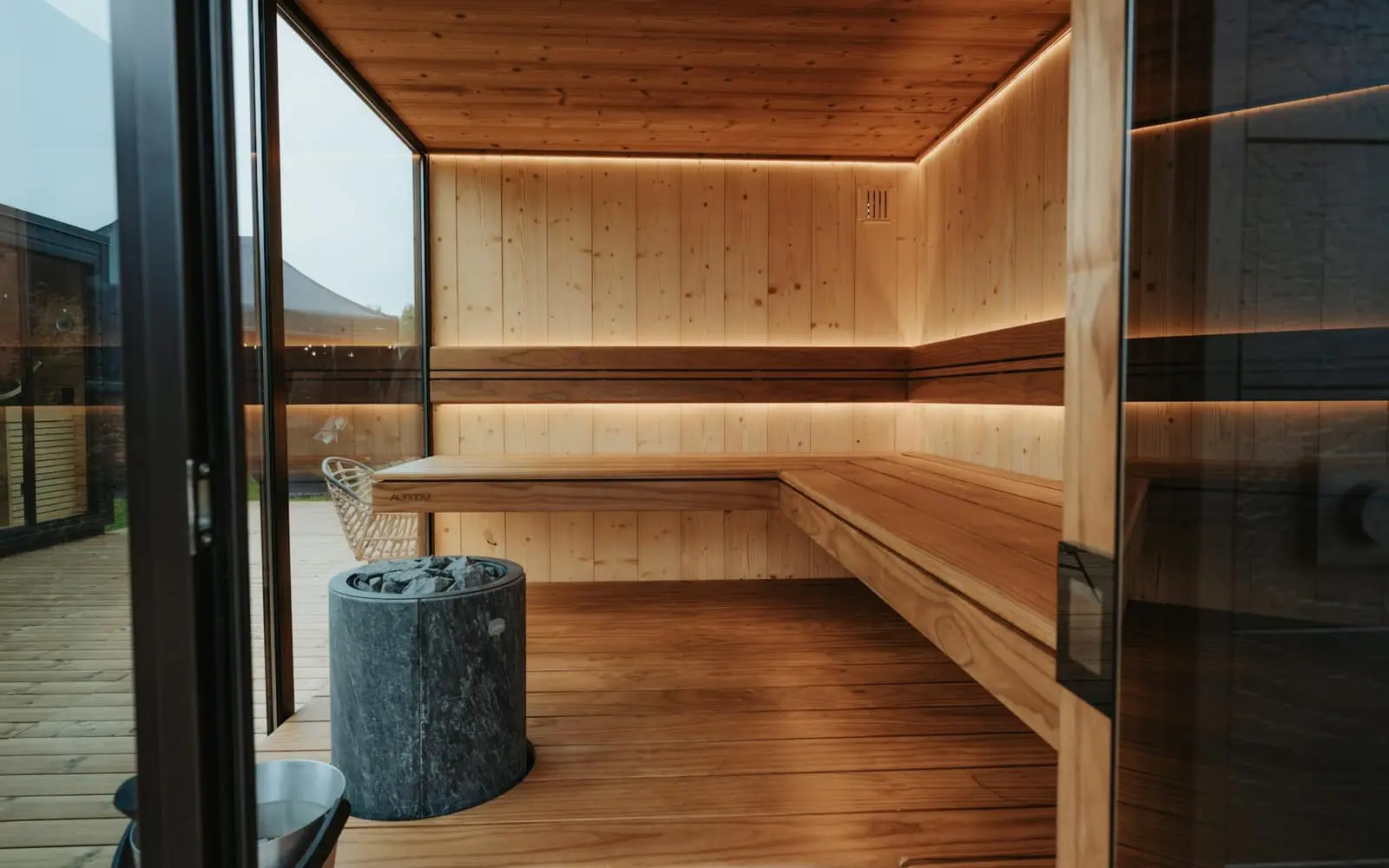
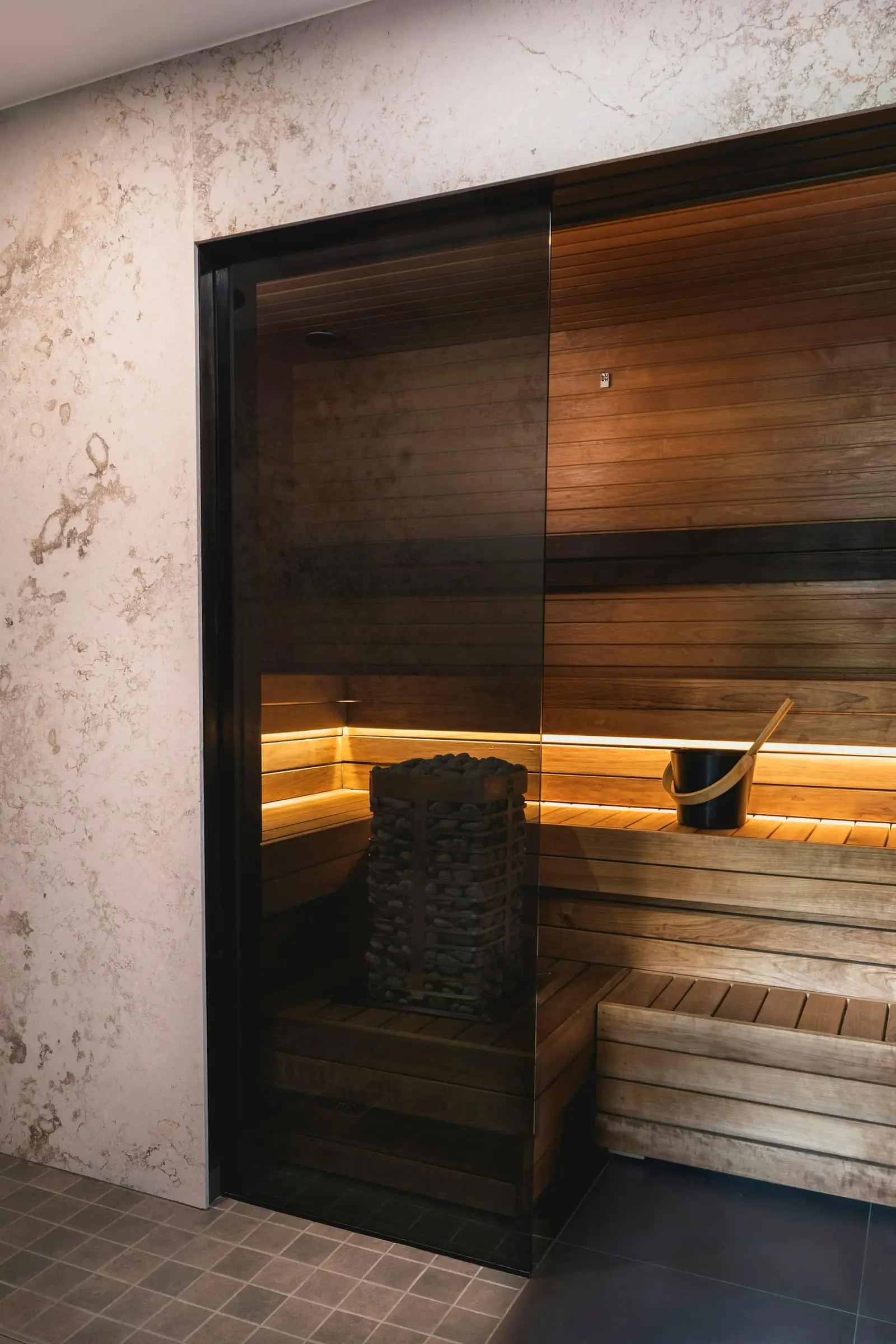
Every outdoor sauna is a wooden building that has to survive years of rain, snow, and sun. How long it lasts depends on several things, and the wood itself is near the top of the list.
This article compares the woods you’ll see in outdoor saunas on one question: decay resistance. Wall thickness is a separate question. For the full buying process, start with the home sauna buying guide.
Short answer: cedar heartwood resists decay naturally. Untreated spruce doesn’t, but thermally modified spruce does. Treat manufacturer durability claims as claims until you see the testing behind them.
How the woods compare
| Wood | Decay resistance | Source | Example sauna |
|---|---|---|---|
| Western red cedar (heartwood) | Resistant | USDA Wood Handbook | Dundalk MiniPOD |
| Eastern white cedar | Cedar species; check the listing | Manufacturer | Canadian Timber Serenity barrel |
| Spruce, untreated | Slightly or nonresistant | USDA Wood Handbook | Many indoor cabins |
| Thermally modified spruce | Typically EN 350 class 2 (“durable”) | Thermory | SaunaLife Ergo E8, G4 |
Cedar
You get natural durability. The USDA Forest Products Laboratory rates western red cedar heartwood as resistant to decay, linked to natural extractives in the wood. You also get the familiar cedar smell.
You give up some predictability. The same research notes that decay resistance varies within and between trees, with the outer heartwood near the base of the tree the most resistant.
Spruce
Untreated spruce is rated slightly or nonresistant to decay in the USDA’s data. That’s fine indoors, but outdoors it depends on a good roof, a raised base, and finish.
Thermally modified wood
Thermal modification heats wood in a controlled process that breaks down the hemicelluloses decay fungi feed on. According to Thermory, thermally modified pine and spruce typically reach EN 350 durability class 2 (“durable”), depending on how intense the treatment is.
SaunaLife’s Ergo E8 uses Thermo-Spruce walls, which SaunaLife says are rated to last twice as long as cedar. That’s the manufacturer’s claim; we haven’t seen the test behind it.
How to choose
My rule of thumb: for the least maintenance, pick cedar or thermally modified wood for any outdoor sauna. If you choose untreated spruce outdoors, budget time for upkeep and make sure the base keeps it off wet ground. The Dundalk MiniPOD is a cedar example; the Ergo E8 is a thermo-wood example.
For how these builds compare on price and setup, the traditional sauna buying guide has more.
Bottom line: wood species decides how forgiving an outdoor sauna is. Cedar and thermo-wood forgive more; untreated spruce needs more care.
Sources
- USDA Forest Products Laboratory, Wood Handbook, Chapter 14, “Biodeterioration of Wood”: fpl.fs.usda.gov
- Freitag, C. M., “Durability of a Changing Western Redcedar Resource,” Wood and Fiber Science: wfs.swst.org
- USDA Forest Products Laboratory, softwood technical sheets (white spruce): fpl.fs.usda.gov
- Thermory, “Understanding wood durability: Durability classes of wood”: thermory.com, accessed October 2, 2026
- Wood specifications: Dundalk, Canadian Timber, and SaunaLife listings via Select Saunas, checked October 1, 2026