
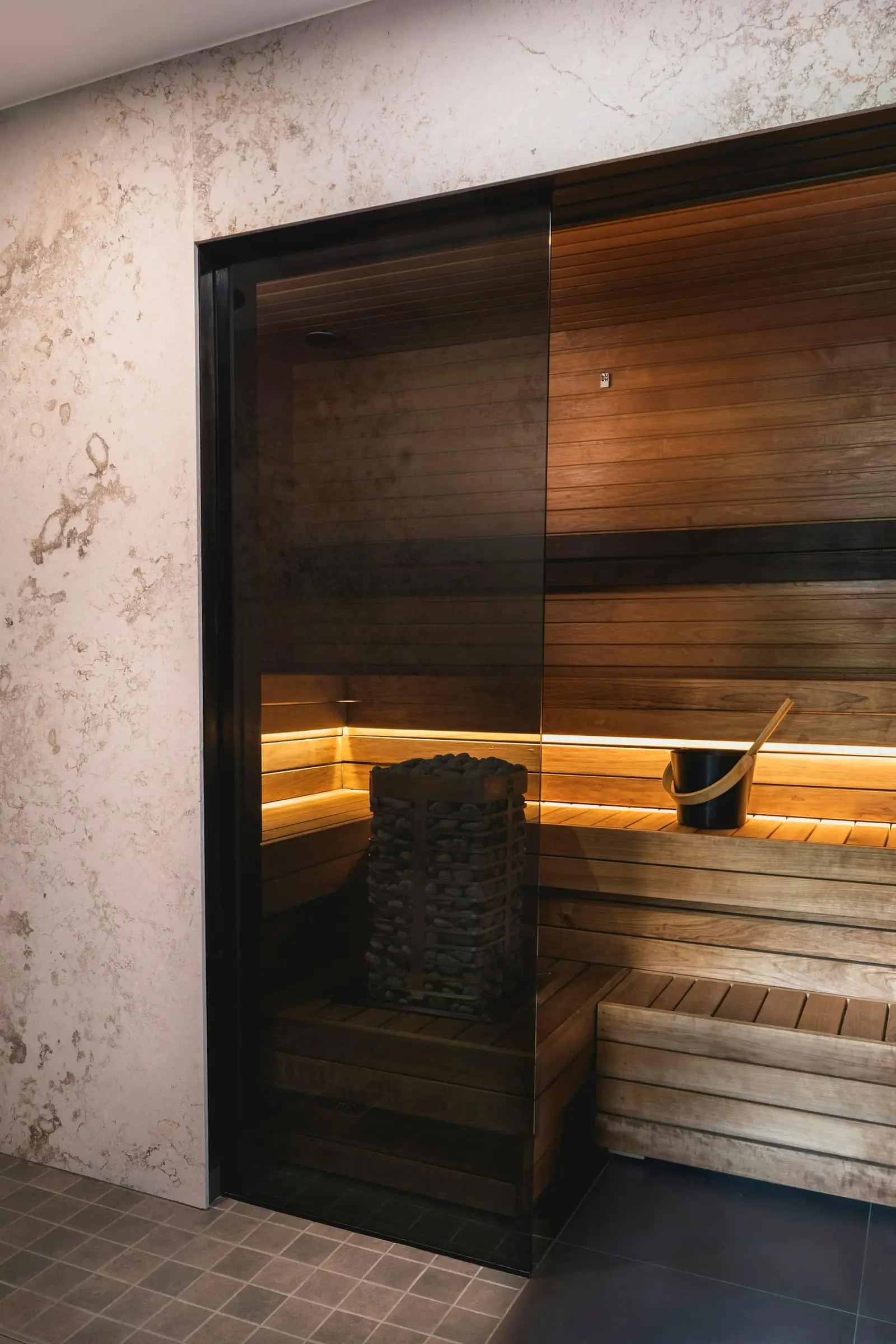
Home saunas used to mean a custom room built by a contractor. Today most are prefab cabins and barrels that ship on a pallet, and the choice comes down to a handful of decisions that matter far more than the wood or the lighting.
This guide walks through those decisions in the order you should make them. Each one gets its own deeper article on the site; here you get the overview and the questions to ask.
Short answer: choose the heat type first, then where the sauna will live, then check the real installed cost. Only after that is it worth comparing specific models.
Start with the heat: infrared, traditional, or hybrid
This is the decision everything else follows from. A traditional sauna heats the air with an electric or wood stove and a basket of rocks, usually to between 150°F and 195°F, and you can ladle water on the rocks for steam. An infrared sauna warms you more directly with panels, at roughly 110°F to 135°F, which is why sessions tend to run longer (Cleveland Clinic).
Hybrids put both in one cabin. The Finnmark Trinity models, for example, pair an infrared array with a small Harvia traditional heater, so you can choose the session you want each day.
My rule of thumb: if you want intense heat and steam in a short session, go traditional. If you want gentler heat you can sit in a little longer (Cleveland Clinic still suggests keeping infrared sessions under 30 minutes), go infrared.
Indoor or outdoor
Your house usually decides this one for you. Indoor cabins need a level floor that can take the weight, some ventilation, and a nearby circuit. Outdoor saunas need a level base: a concrete slab, pavers, flagstone, a wooden platform, or compacted gravel, but not bare earth, which can shift as it erodes or gets soggy (Almost Heaven).
Outdoor models also face weather, so construction quality matters more. That’s covered below under walls and wood.
What it costs once it’s installed
Run the numbers before you fall for the photos. The cabin price is only the start.
| Cost item | Typical range | Notes |
|---|---|---|
| Cabin | about $2,200–15,000 | From the Dynamic Andora (infrared) to the Golden Designs Nora (outdoor hybrid) |
| 240V circuit, indoor | about $450–900 | Panel in the same building |
| 240V circuit, detached outdoor | about $1,500–3,800 | Depends on distance from the panel |
| Heater, if not included | varies by model | Several barrels ship without one |
| Electricity per session | under about $1.10 | 6kW heater running flat out for an hour at 18.34¢/kWh; most sessions use less |
Circuit ranges come from a 2026 installer cost guide; the electricity figure uses the U.S. average residential price reported by the EIA. Your local rates will differ, so get an electrician’s quote early.
Sizing it to your space
Measure the room before you shortlist anything. A 1–2 person indoor cabin like the SaunaLife X2 needs about a 5 ft by 5 ft footprint (59.1 in. square) and roughly 6 ft 9 in. of height. Four-person cabins jump to about 6 ft wide.
Heater size follows cabin volume. A common rule is about 1kW per 45–50 cubic feet of well-insulated room, sized up for glass and for outdoor cabins (sauna heater sizing guides, 2026).
Heater included or bought separately
This trips up a lot of buyers. Some cabins include the heater in the price (the Dundalk MiniPOD ships with a 4.5kW electric heater). Many barrels and kits don’t, which means the sticker price isn’t comparable until you add a heater.
When you compare two saunas, write down whether each includes the heater, which size, and whether it’s dial-controlled or app-controlled.
Glass front or fully enclosed
Glass fronts look great and make a small room feel bigger. You give up some privacy and some heat: heater sizing guides recommend upsizing for large glass areas. Fully enclosed cabins hold heat more easily and feel more traditional.
Outdoor build quality: walls and wood
Two things decide how an outdoor sauna ages: wall thickness and wood species. Thicker walls (the SaunaLife G2 uses 1.65 in. Nordic Spruce) add mass and stiffness. Wood choice matters even more. The USDA’s Wood Handbook rates western red cedar heartwood as resistant to decay and spruce as slightly or nonresistant, which is why many spruce saunas use thermally modified wood for outdoor builds.
Paying for it
Many sauna retailers offer financing or layaway. Read the terms. A “no interest if paid in full” offer is usually deferred interest: if any balance remains when the promotion ends, interest can be charged back to the purchase date (Consumer Financial Protection Bureau).
Your first sessions
Start short. Cleveland Clinic suggests beginners start with about 5 minutes and add time each session, working up to around 15–20 minutes, and drinking plenty of water afterward. Skip the sauna after drinking alcohol, and check with your doctor first if you have a heart condition, are pregnant, are over 65, or take medication.
Shortlisting a model
Once you know your heat type, location, and budget, you can compare models properly. Our side-by-side comparison of four home saunas covers prices, capacity, circuits, and warranties for current picks. If you’ve already decided on a heat type, the infrared sauna buying guide and the traditional sauna buying guide go deeper on each.
Bottom line: the best home sauna is the one your house can support without surprises. Settle heat type, location, and total cost first, and the model choice gets easy.
Sources
- Cleveland Clinic, “Why Infrared Saunas Are ‘Cooler’ Than Traditional Saunas,” April 14, 2022: health.clevelandclinic.org
- U.S. Energy Information Administration, Electric Power Monthly, Table 5.6.A (residential average 18.34¢/kWh, June 2026 data), via energyfactbook.com, accessed October 1, 2026
- Haven of Heat, “Typical Cost to Have a Sauna Installed,” 2026: havenofheat.com
- Almost Heaven Saunas, “How to Prepare Your Barrel Sauna Site,” August 23, 2020: almostheaven.com
- The Sauna Republic, “What Size Sauna Heater Do I Need?” 2026: thesaunarepublic.com
- USDA Forest Products Laboratory, Wood Handbook, Chapter 14, “Biodeterioration of Wood”: fpl.fs.usda.gov
- Consumer Financial Protection Bureau, “How to understand special promotional financing offers on credit cards”: consumerfinance.gov
- Cleveland Clinic, “Get Your Sweat On: The Benefits of a Sauna,” August 12, 2024: health.clevelandclinic.org
- Product specifications and prices: manufacturer and Select Saunas listings, checked October 1, 2026