
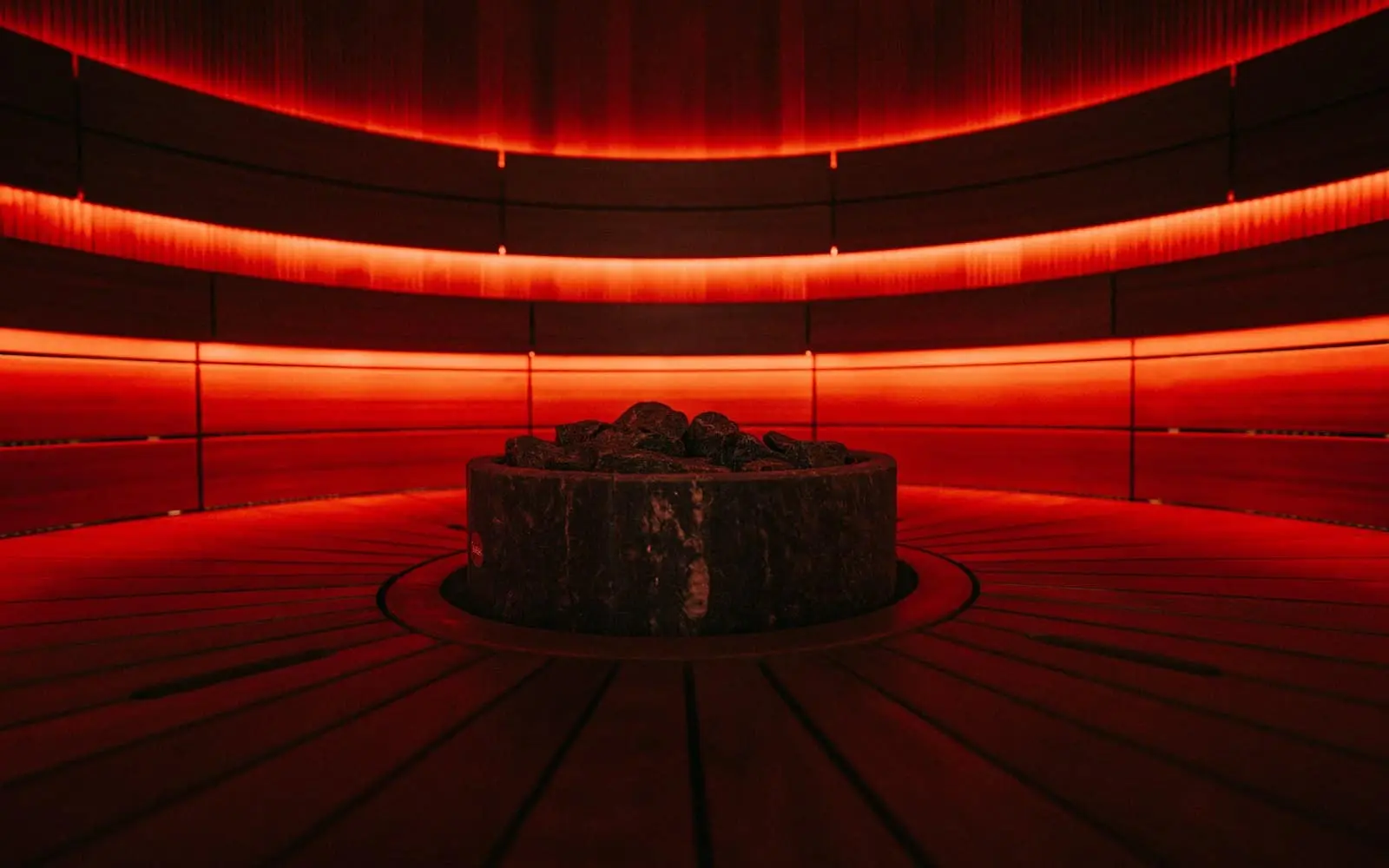
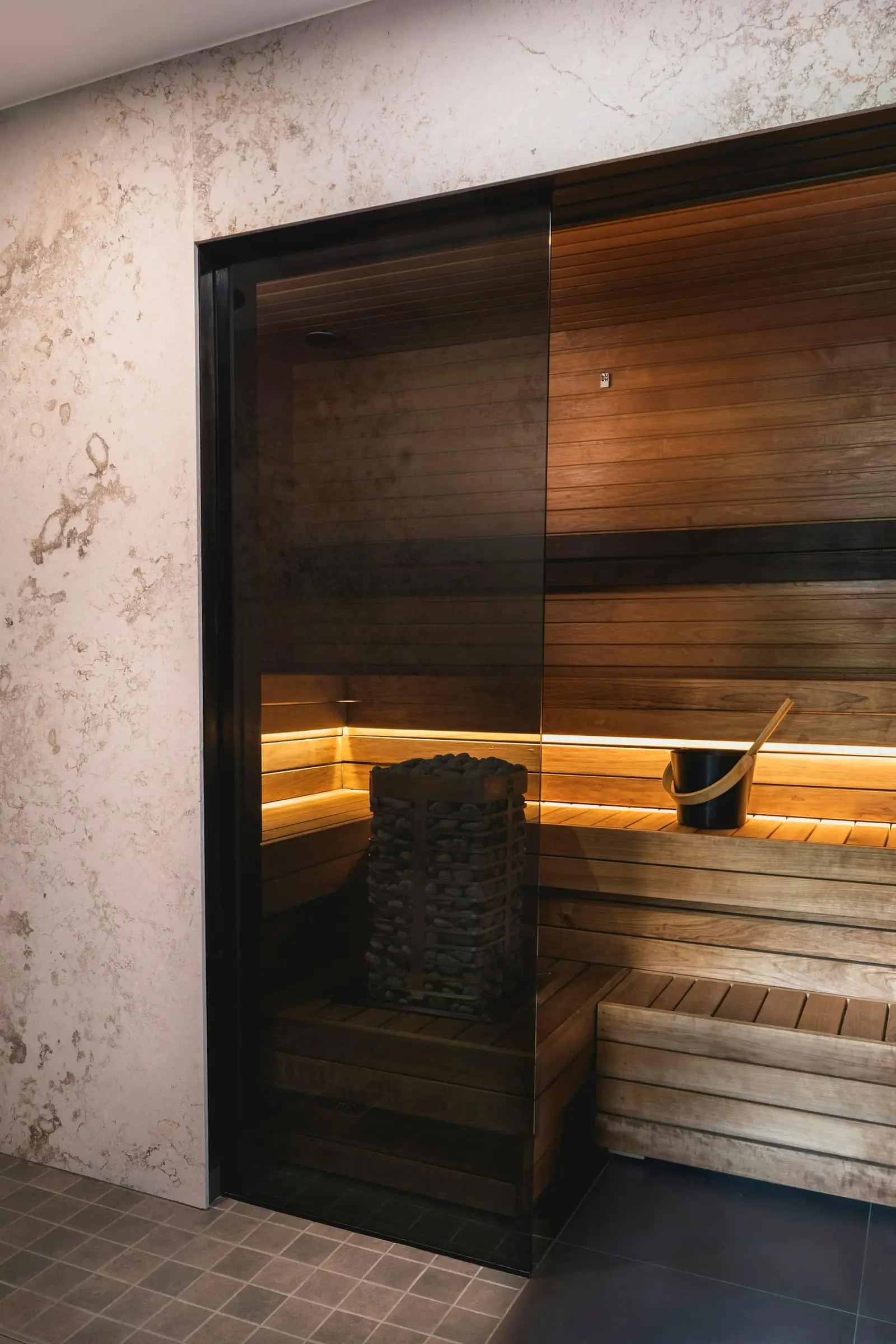
Gyms put them side by side, so people treat them as the same thing. They aren’t. One is hot and dry. The other is cooler and wet.
This article compares the two on the numbers, then on what each asks of your house. For cabins, the home sauna buying guide is the place to start.
Short answer: a sauna is dry heat at about 160°F or more. A steam room is moist heat at about 100 to 110°F with very high humidity. Pick the sauna if you want higher heat and a simple wooden room. Pick steam if you prefer wet heat and can waterproof a space for it.
The numbers side by side
| Sauna | Steam room | |
|---|---|---|
| Typical temperature | About 160°F; Finnish Sauna Society range 176 to 212°F | About 100 to 110°F |
| Humidity | Low, raised briefly by water on the stones | High |
| Heat source | A stove heats rocks | A generator boils water into steam |
| Suggested time | About 15 to 20 minutes | No more than 10 minutes |
The steam room figures and the 160°F sauna figure come from Medical News Today. The Finnish range comes from thisisFINLAND, and the sauna time from Cleveland Clinic.
Why the cooler room can feel hotter
Medical News Today states the difference plainly: “steam rooms offer moist heat,” while a sauna provides dry heat.
In dry air, sweat evaporates and cools you. In saturated air it can’t, so 110°F of steam can feel as demanding as a much hotter sauna. That explanation is general physics and my own reading, not a quote from the sources.
What each is claimed to do
Be careful with benefit lists. Medical News Today grades its own: a 2012 study found moist heat improved skin blood flow in older adults, and a 2013 study found moist heat after exercise helped reduce pain. For skin, stress, and sinus claims it cites no studies. On weight loss it says there is “no scientific evidence” that steam rooms help, and any loss is mainly water.
Saunas have the longer research record, mostly on Finnish dry saunas. That is general information, not medical advice.
Hygiene and safety
Two points separate the rooms.
A steam room, Medical News Today says, is “the ideal environment for certain bacteria and germs to grow and spread.” It recommends flip-flops or shower shoes.
Both rooms dehydrate you. Drink water before you go in. Medical News Today lists people who should avoid steam rooms, including pregnant people and those with heart disease or very low or high blood pressure. Cleveland Clinic gives similar cautions for saunas. If any of that applies to you, ask your doctor first.
Having one at home
Here’s what the comparison charts won’t tell you. A home sauna is a product you can order. A home steam room is a construction project.
A sauna cabin arrives as a kit. The Dynamic Andora infrared cabin costs $2,210.99 and plugs into a 120V/15A outlet. The Almost Heaven Salem barrel sauna costs $4,176 and needs a 240V, 30-amp circuit for its 6kW heater.
A steam room needs a sealed, tiled enclosure, a steam generator, plumbing, and a drain. This site doesn’t list steam generators, so I have no verified prices to give you. Get a contractor’s quote before you compare costs.
You get a finished room in days with a sauna kit. You give up the wet heat. A traditional sauna gets you partway: water on the stones gives a burst of steam, though not a steam room’s constant humidity.
Bottom line: if you want something you can buy and install without rebuilding a bathroom, the sauna wins. If wet heat is the whole point for you, budget for a built steam room and a contractor.
Sources
- Medical News Today, “Steam room: Benefits, risks, and differences to sauna,” medically reviewed by Debra Rose Wilson, Ph.D., last updated December 7, 2023: medicalnewstoday.com
- thisisFINLAND, “Bare facts of the sauna in Finland,” accessed October 12, 2026: finland.fi
- Cleveland Clinic, “Get Your Sweat On: The Benefits of a Sauna,” August 12, 2024: health.clevelandclinic.org
- Dynamic Saunas and Almost Heaven listings (price, power), checked September and October 2026