
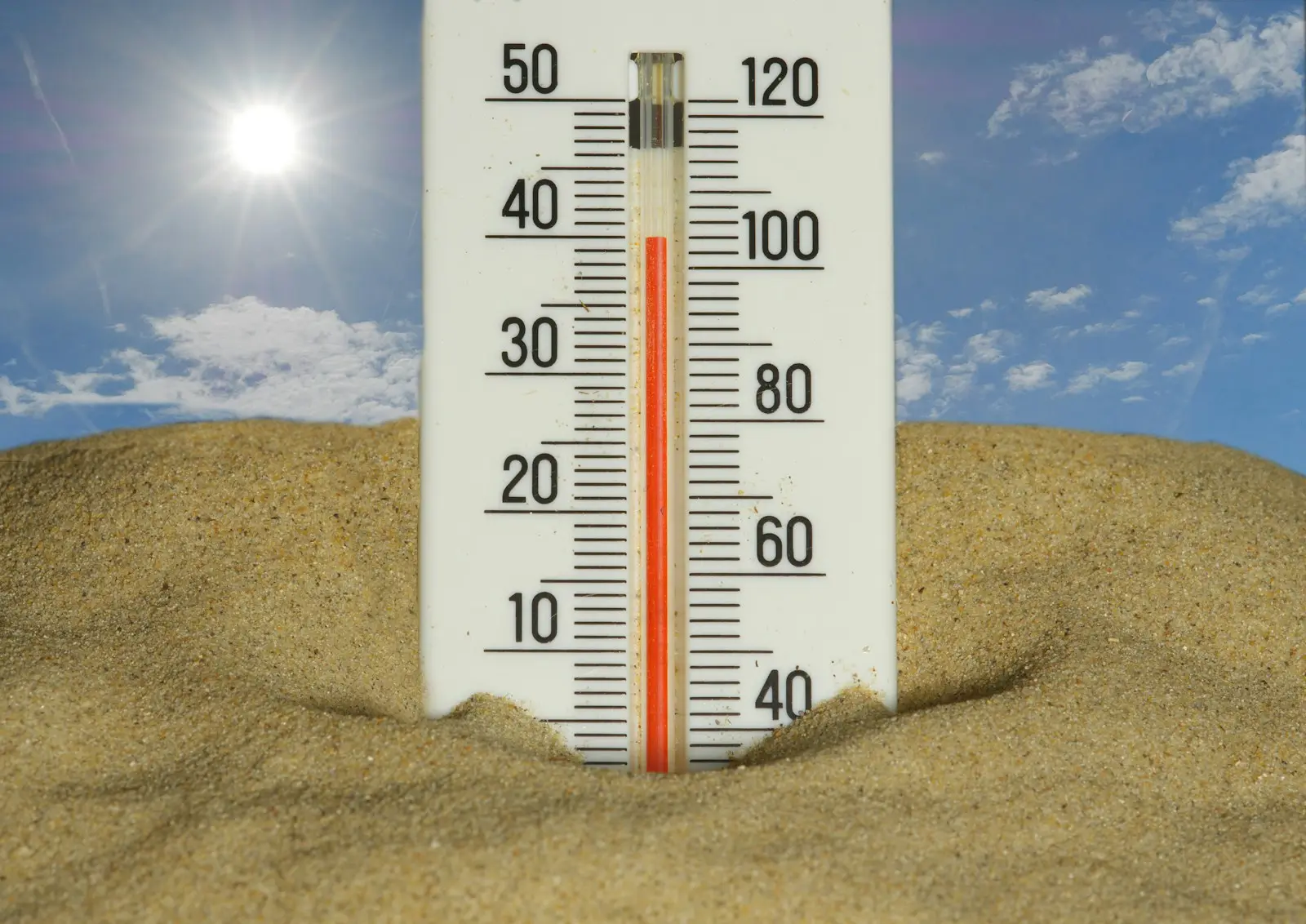

It is easy to think a new infrared sauna is broken. The display says 125°F, a traditional sauna runs at 180°F, and the cabin never gets close.
Nothing is wrong. An infrared sauna works at a lower air temperature on purpose. This article covers what to set, what the maximums on the listings mean, and where to start. For heaters, sizes, and wiring, start with the infrared sauna buying guide.
Short answer: set it between 110 and 135°F. Start at the low end for 5 to 10 minutes and work up. The maximum on the spec sheet is a ceiling, not a target.
The working range
Cleveland Clinic puts the operating range of infrared saunas at about 110 to 135°F. For a first session it suggests starting around 110°F for 5 to 10 minutes, then building toward 20 to 30 minutes as you get used to it.
Compare that with a traditional sauna. Harvia’s heater manual gives 160 to 185°F as the normal range. So an infrared session can be 50°F cooler on the thermometer and still make you sweat.
Why it works cooler
A traditional heater warms a pile of stones, the stones warm the air, and the air warms you. The air has to be very hot for that to work.
Infrared panels send radiant heat straight to whatever is in front of them, including you. You feel warm before the air does. That is also why you can get in while the cabin is still warming up.
Maximums on the listings
| Sauna | Stated maximum |
|---|---|
| Dynamic Andora | 140°F |
| Durasage 2-Person | about 140°F in 10-15 minutes |
| Sunlighten Solo (dome) | 150°F |
| Finnmark FD-3 | 170°F |
| Finnmark FD-4 Trinity (infrared side) | 170°F |
| HigherDOSE Sauna Blanket | up to 175°F |
From manufacturer listings, checked September 2026. Several cabins we list, including the Clearlight and Sunlighten cabins, don’t state a maximum in our data.
Does a higher maximum matter?
Here’s what the spec sheet won’t tell you. All of these go above the range Cleveland Clinic describes. A cabin that tops out at 140°F already covers 110 to 135°F with room to spare.
A higher maximum buys two things. It gives headroom in a cold room, where a low-powered cabin may struggle to reach its setting. And it suits people who want infrared to feel closer to a traditional sauna. The Finnmark FD-3, which pairs carbon panels with short-wave panels, reaches 170°F.
It isn’t a measure of quality. I wouldn’t pay more for 170°F unless you know you want it that hot.
The blanket is a different case
The HigherDOSE blanket lists up to 175°F, the highest figure in the table. That is the temperature of a surface wrapped around you, not of air in a room. Contact heat feels much stronger than air at the same reading. Start at a low level, keep a layer of cotton between you and the blanket, and don’t compare its number with a cabin’s.
Where the reading is taken
The display shows the temperature at the cabin’s sensor, not where you sit. Heat rises, so the air at your feet is cooler than the air at your head. In a traditional sauna the difference is large: Harvia’s manual gives 180°F above the heater against 140°F at the upper bench. In an infrared cabin the air matters less, because the panels are doing much of the work. Don’t chase the display. Go by how you feel.
A sensible way to start
- Set 110 to 115°F.
- Get in once it is warm, or while it warms.
- Stay 5 to 10 minutes the first few times.
- Add a few minutes per session, toward 20 to 30.
- Raise the temperature by 5°F at a time if you want more.
- Drink water before and after.
Leave if you feel dizzy, sick, or faint. Cleveland Clinic’s general sauna advice is to get out as soon as you feel unwell. If you are pregnant, have a heart condition, or take medication that affects sweating or blood pressure, ask your doctor before you start.
If the cabin won’t reach its setting
- Give it time. Durasage quotes 10 to 15 minutes to about 140°F. Larger cabins take longer.
- Check the room. A cabin in an unheated garage in winter starts 30 or 40°F behind.
- Close the door and roof vent.
- Check the circuit. A cabin sharing a breaker may trip before it warms up.
My rule of thumb: if you’re sweating steadily at 120°F after 15 minutes, the sauna is working. The number on the display is less important than that.
To see how three infrared cabins compare, read our infrared sauna comparison.
Bottom line: infrared runs at 110 to 135°F, well under a traditional sauna. Start low, build slowly, and don’t shop by maximum temperature.
This article is general information, not medical advice.
Sources
- Cleveland Clinic, “6 Possible Benefits of Infrared Saunas,” April 14, 2022: health.clevelandclinic.org
- Cleveland Clinic, “Get Your Sweat On: The Benefits of a Sauna,” August 12, 2024: health.clevelandclinic.org
- Harvia, KIP electric sauna heater owner’s/operator’s manual (North America), September 17, 2015: almostheaven.net
- Dynamic, Durasage, Sunlighten, Finnmark, and HigherDOSE listings (maximum temperature), checked September 2026