
If you already own a cold plunge, the next upsell is heat: a sauna, a hot tub, or a hot-cold tub. The pitch is that alternating beats cold alone.
This article compares the two in the trials that tested both. It sits under our overview of contrast therapy benefits. It is general information, not medical advice.
Short answer: in a 2013 meta-analysis, contrast therapy and a cold plunge reduced soreness about equally, with no significant difference. A 2017 meta-analysis of 23 team-sport studies found each helped perceived fatigue at different times, and neither helped soreness. On this evidence, adding heat doesn’t make recovery better than cold alone.
Head to head in the 2013 review
According to Bieuzen and colleagues (2013), contrast water therapy and cold water immersion produced no significant difference in soreness at 24 hours. Strength favored contrast therapy in only two studies, and power showed no difference.
| Outcome | Contrast therapy vs cold water alone |
|---|---|
| Soreness at 24 h | No significant difference |
| Strength | Favored contrast in 2 studies only |
| Power | No difference |
| Muscle damage marker (CK) | Trend toward cold; not significant |
Team sports: the 2017 meta-analysis
Higgins (2017) found a split picture. The meta-analysis in the Journal of Strength and Conditioning Research pooled 23 studies with 606 team-sport athletes.
| Outcome | Cold water | Contrast therapy |
|---|---|---|
| Jump and sprint at 24 h | Helped (borderline confidence intervals) | Not reported as helping |
| Perceived fatigue | Helped at 72 h | Helped at 24 and 48 h |
| Muscle soreness | Didn’t help | Didn’t help |
Neither method improved soreness in team-sport players, the abstract reports.
The muscle-building trade-off
Cleveland Clinic warns that cold therapy’s anti-inflammatory effect “can also silence the muscle-building signals,” especially within four hours of a strength workout. Our sources don’t test whether adding heat changes that.
Limitations
The 2013 review’s trials were all at high risk of bias, small, and mostly male. Most tested one session after one workout. Although the 2017 review is larger, its abstract doesn’t give point estimates, and some confidence intervals sit right at zero.
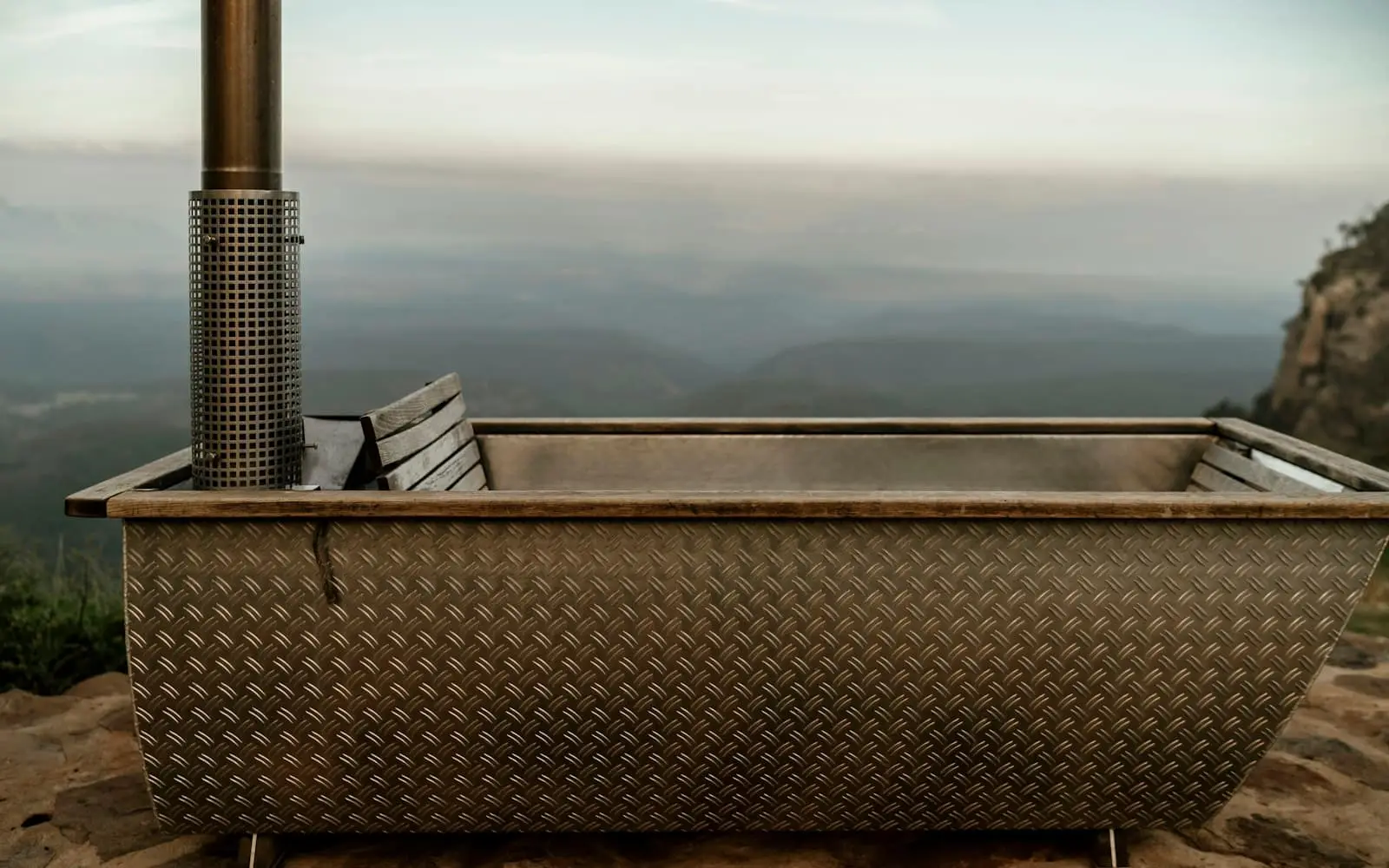
Here’s what the spec sheet won’t tell you. A combined hot-cold tub like the SaunaLife S1NC runs cold or hot in one 124-gallon shell, but not both in one session. Raising 124 gallons from 50°F to 100°F takes about 15 kWh of heat, roughly 4.5 hours at its listed 3.38kW heating output before losses (our arithmetic). Trial-style rounds need two separate tubs.
My rule of thumb: buy the cold plunge for recovery, and add heat only if you’ll enjoy it for its own sake.
Bottom line: in the trials, contrast therapy matched a cold plunge for soreness and didn’t beat it. If recovery is the goal, cold alone does as well on this evidence. For more on the research, see the contrast therapy benefits overview linked above.
Sources
- Bieuzen F, Bleakley CM, Costello JT, “Contrast Water Therapy and Exercise Induced Muscle Damage: A Systematic Review and Meta-Analysis,” PLOS One, 2013: pmc.ncbi.nlm.nih.gov
- Higgins TR, Greene DA, Baker MK, “Effects of Cold Water Immersion and Contrast Water Therapy for Recovery From Team Sport: A Systematic Review and Meta-analysis,” Journal of Strength and Conditioning Research, 2017 (abstract): pubmed.ncbi.nlm.nih.gov
- Cleveland Clinic, “Are ‘Cold Plunge’ Ice Baths Good for You?” May 8, 2026: health.clevelandclinic.org
- SaunaLife S1NC listing, as recorded in our product data