
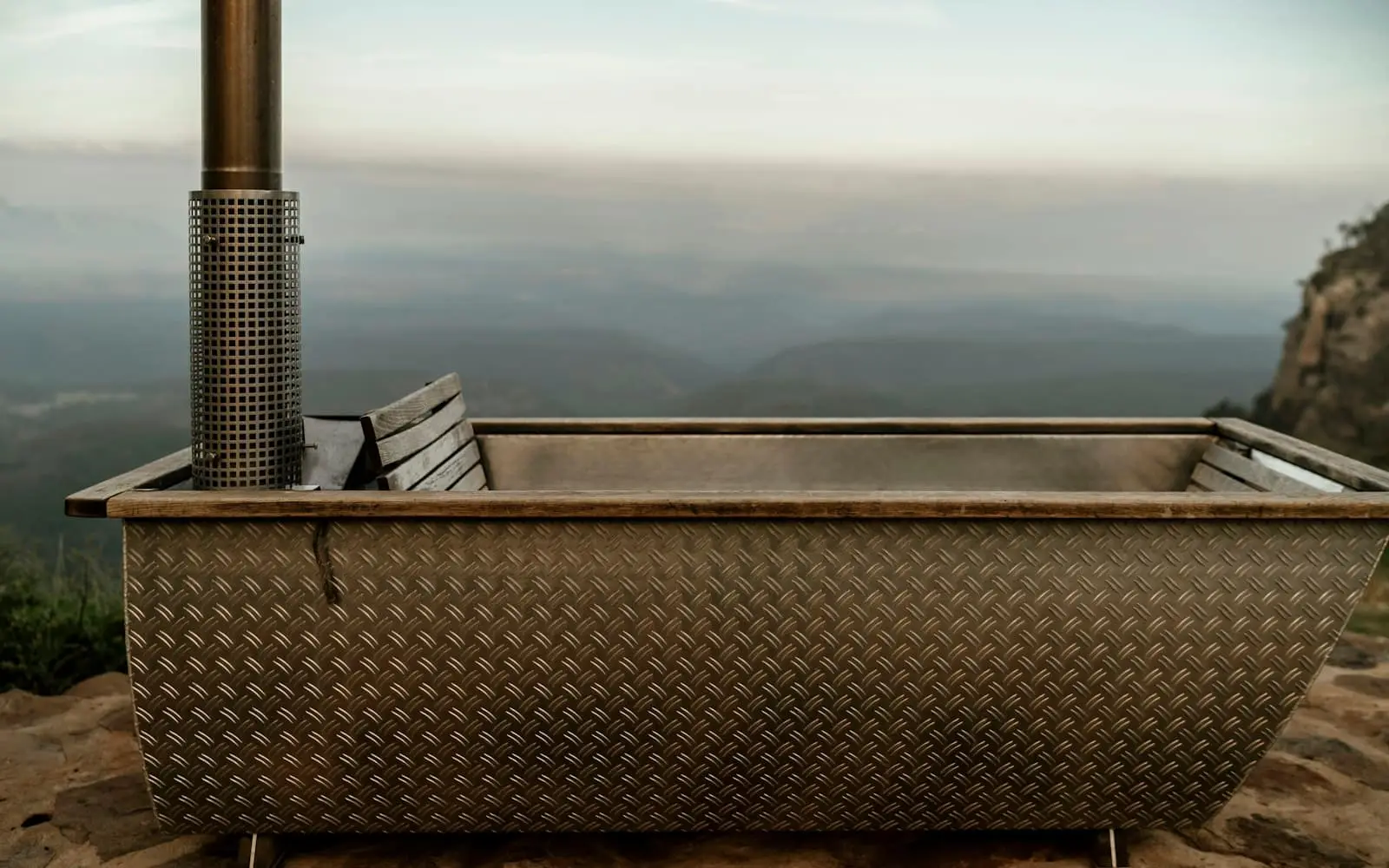
A sauna next to a cold plunge invites a simple routine: hot, then cold, then hot again. The research name for this is contrast water therapy, and one review pooled 18 controlled trials of it.
This page looks at what controlled trials of hot-cold water have measured. It is general information, not medical advice. If you’re choosing a tub, the cold plunge buying guide covers that side.
Short answer: contrast water therapy beat resting for muscle soreness and strength loss after exercise in a 2013 meta-analysis of 18 trials with 356 people. However, the soreness gains were small, about 6 to 9% on a pain scale, and every trial was at high risk of bias. It didn’t beat a cold plunge alone. Ask a doctor first if you have a heart, blood pressure, or circulation condition, or are pregnant.
What the research measured
Bieuzen (2013) found the clearest evidence. The systematic review in PLOS One pooled 18 trials with 356 healthy people, mostly men, who alternated cold and hot water after hard exercise. Compared with resting, contrast water therapy reduced soreness at every follow-up and reduced strength loss.
| Outcome vs resting | Result (2013 meta-analysis) |
|---|---|
| Soreness at 24 h | Less (SMD -0.51, 13 trials) |
| Soreness at 48 h | Less (SMD -0.58, 10 trials) |
| Soreness at 72 h | Less (SMD -0.40, 5 trials) |
| Strength loss | Less at 24 and 48 h |
| Power | No difference in follow-up scores |
The authors’ verdict:
“The current evidence base shows that CWT is superior to using passive recovery or rest after exercise.”
Bieuzen F, Bleakley CM, Costello JT, PLOS One, 2013
They added that “these conclusions are not definitive based on poor methodological quality and small sample sizes.”
How big is the effect?
Converted to a 10 cm pain scale, the review’s mean soreness reductions were about 6.8% at 24 hours and 5.7% at 48 hours. The authors judged many of these not clinically relevant. In plain terms, people felt a little less sore, not pain-free.
Contrast therapy vs other recovery methods
The same review found no significant soreness difference between contrast therapy and cold water immersion alone. It also found little difference against active recovery, compression, or stretching. Against warm water alone, contrast therapy came out ahead for soreness at 24 hours.
A 2017 meta-analysis in the Journal of Strength and Conditioning Research pooled 23 studies of team-sport athletes. According to its abstract, contrast therapy helped perceived fatigue at 24 and 48 hours, but neither contrast therapy nor cold water helped muscle soreness.
Limitations
Every trial in the 2013 review was rated high risk of bias. Only three described how people were randomized, and none blinded participants. Most tested a single session after one workout. None of our sources tested a home sauna followed by a cold plunge, which is how most owners do it.
Here’s what the spec sheet won’t tell you. The trials used hot water up to 45°C (113°F). That’s hotter than the 104°F the Consumer Product Safety Commission sets as the ceiling for hot tubs.
Who should check with a doctor first
For the cold side, Cleveland Clinic lists heart disease, high blood pressure, diabetes, pregnancy, peripheral neuropathy, poor circulation, venous stasis, and cold agglutinin disease. For the sauna, it lists people over 65 or under 16, anyone pregnant or trying to conceive, people with heart or neurologic conditions, and anyone on medication.
My rule of thumb: treat contrast therapy as a comfort routine with modest recovery benefits, not a reason to buy both a sauna and a plunge.
Bottom line: alternating hot and cold water eases soreness a little more than resting, but no more than a cold plunge alone, and the trials are weak. For tub choices, see the cold plunge buying guide linked above.
Sources
- Bieuzen F, Bleakley CM, Costello JT, “Contrast Water Therapy and Exercise Induced Muscle Damage: A Systematic Review and Meta-Analysis,” PLOS One, 2013: pmc.ncbi.nlm.nih.gov
- Higgins TR, Greene DA, Baker MK, “Effects of Cold Water Immersion and Contrast Water Therapy for Recovery From Team Sport,” Journal of Strength and Conditioning Research, 2017 (abstract): pubmed.ncbi.nlm.nih.gov
- Cleveland Clinic, “Are ‘Cold Plunge’ Ice Baths Good for You?” May 8, 2026: health.clevelandclinic.org
- Cleveland Clinic, “Get Your Sweat On: The Benefits of a Sauna,” August 12, 2024: health.clevelandclinic.org
- U.S. Consumer Product Safety Commission, “CPSC Warns Of Hot Tub Temperatures,” release 79-071, December 31, 1979: cpsc.gov