
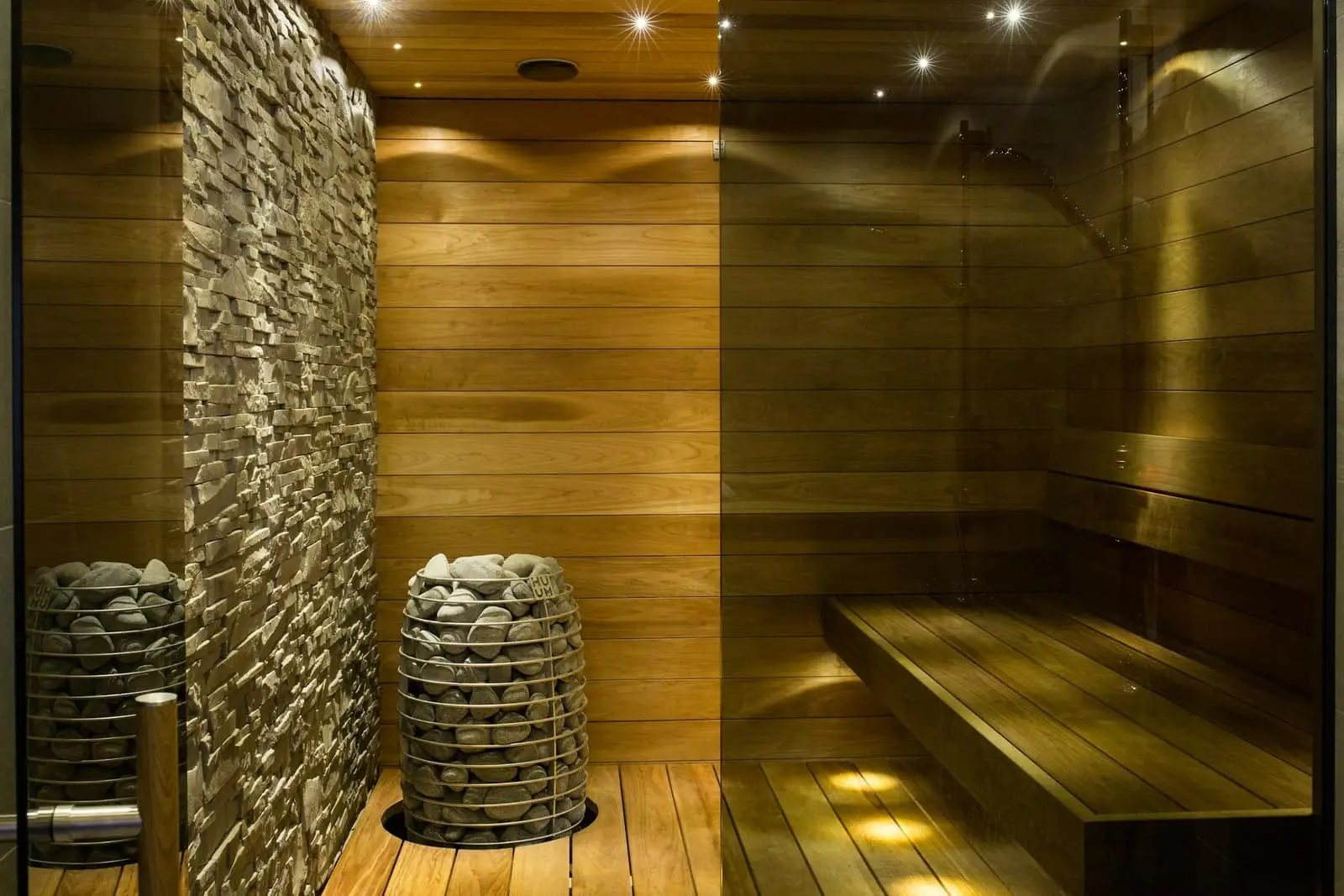
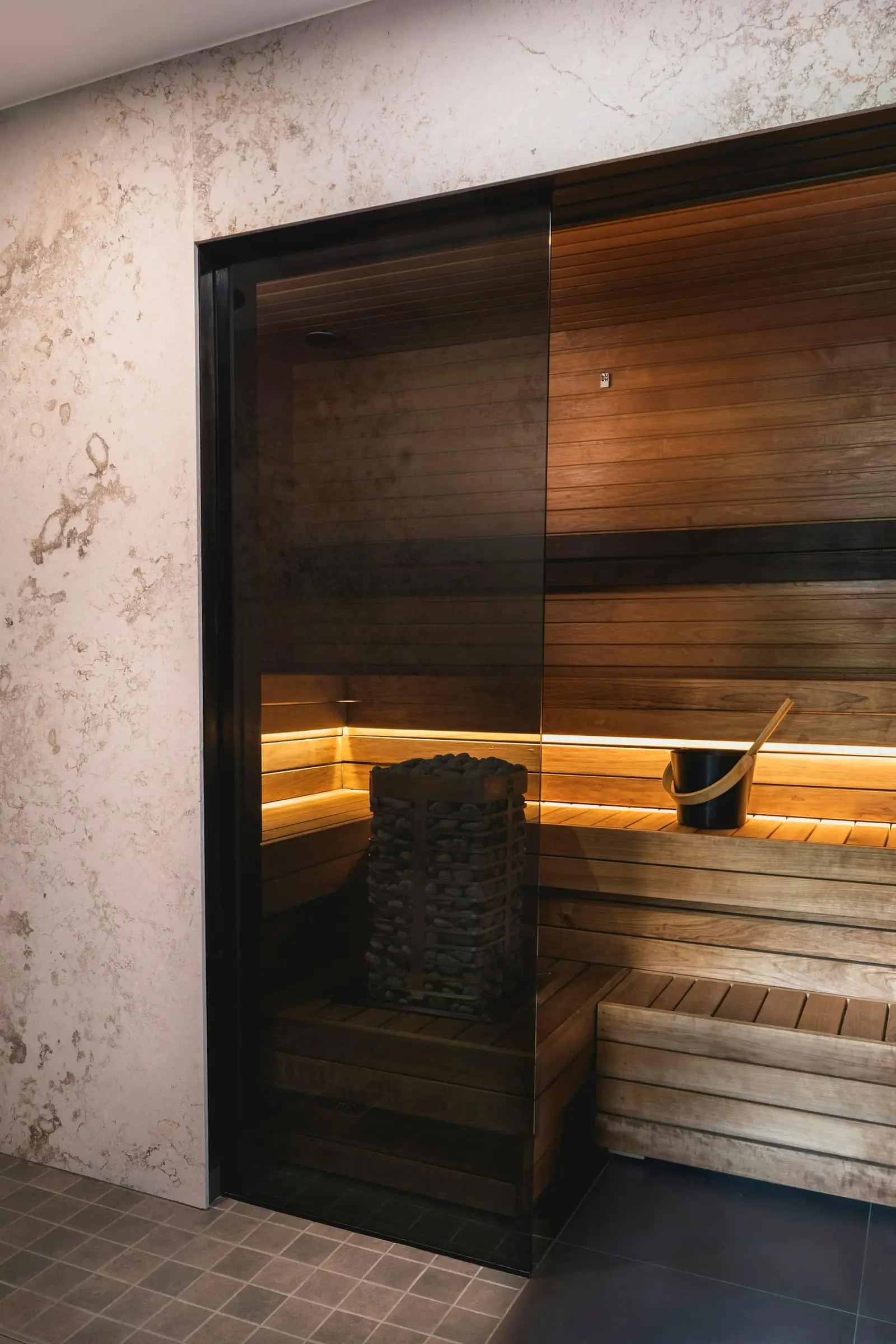
Where a sauna lives shapes almost everything about owning it: the install cost, the build quality you need, and how often you’ll walk out to use it on a cold night.
This article is about that one decision. Most buyers treat it as a matter of taste. In practice, your house usually makes the call. For the full sequence of choices, start with the home sauna buying guide.
Short answer: go indoor if you have a level, ground-floor space near your electrical panel. Go outdoor if you don’t, or if you want the sauna as a separate retreat and can prepare a proper base.
What an indoor sauna needs
An indoor cabin needs four things: floor space, a floor that can take the weight, ventilation, and a nearby circuit.
Floor space is easy to check. The Almost Heaven Madison measures 65 in. wide by 53 in. deep outside; the Golden Designs Forssa is 75 by 48 in. Add a few inches around the cabin and room for the door to swing.
Weight matters more upstairs. Cabins run from about 250 lbs (the Dynamic Barcelona) to over 400 lbs for a 2-person hybrid like the Finnmark FD-4 (437 lbs), before you add people.
Wiring is usually simpler indoors. A 2026 installer guide puts a 240V circuit at about $450–900 when the panel is in the same building.
What an outdoor sauna needs
An outdoor sauna needs a level base. Almost Heaven lists a concrete slab, flagstone, a wooden platform, brick pavers, or compressed gravel, and warns against bare earth, which can erode or turn soggy and pull the sauna out of level.
It also needs power run to it. The same installer guide puts a detached run of 25–75 feet at about $1,500–3,800, more than indoor wiring in most cases.
And it needs to survive weather. That’s where wall thickness and wood species matter, which is why outdoor models like the Dundalk MiniPOD use western red cedar and the SaunaLife G-series uses thick Nordic Spruce.
Side by side
| Indoor | Outdoor | |
|---|---|---|
| Base | Existing level floor | Slab, pavers, platform, or compacted gravel |
| 240V circuit (2026 estimate) | about $450–900 | about $1,500–3,800 |
| Weather exposure | None | Rain, snow, sun, freeze-thaw |
| Build quality that matters most | Fit and finish | Wall thickness, wood species, roof |
| Example | Almost Heaven Sutton | Dundalk MiniPOD |
How to decide
Walk through your house with a tape measure. If you find a level, ground-floor space that fits the cabin with a few inches to spare, and your panel is close, indoor is usually the cheaper and simpler path.
If no room works, or you’d rather keep humidity and heat out of the house, outdoor makes sense. Budget for the base and the longer electrical run from the start.
Ready to compare specific cabins? Our home sauna comparison lists three indoor models and one outdoor hybrid with prices and circuits.
Bottom line: indoor saves money if you have the space. Outdoor costs more to set up but gives you a sauna that doesn’t compete with your house for room.
Sources
- Almost Heaven Saunas, “How to Prepare Your Barrel Sauna Site,” August 23, 2020: almostheaven.com
- Haven of Heat, “Typical Cost to Have a Sauna Installed,” 2026: havenofheat.com
- Product dimensions and weights: manufacturer listings via Select Saunas and Amazon, checked October 1, 2026