

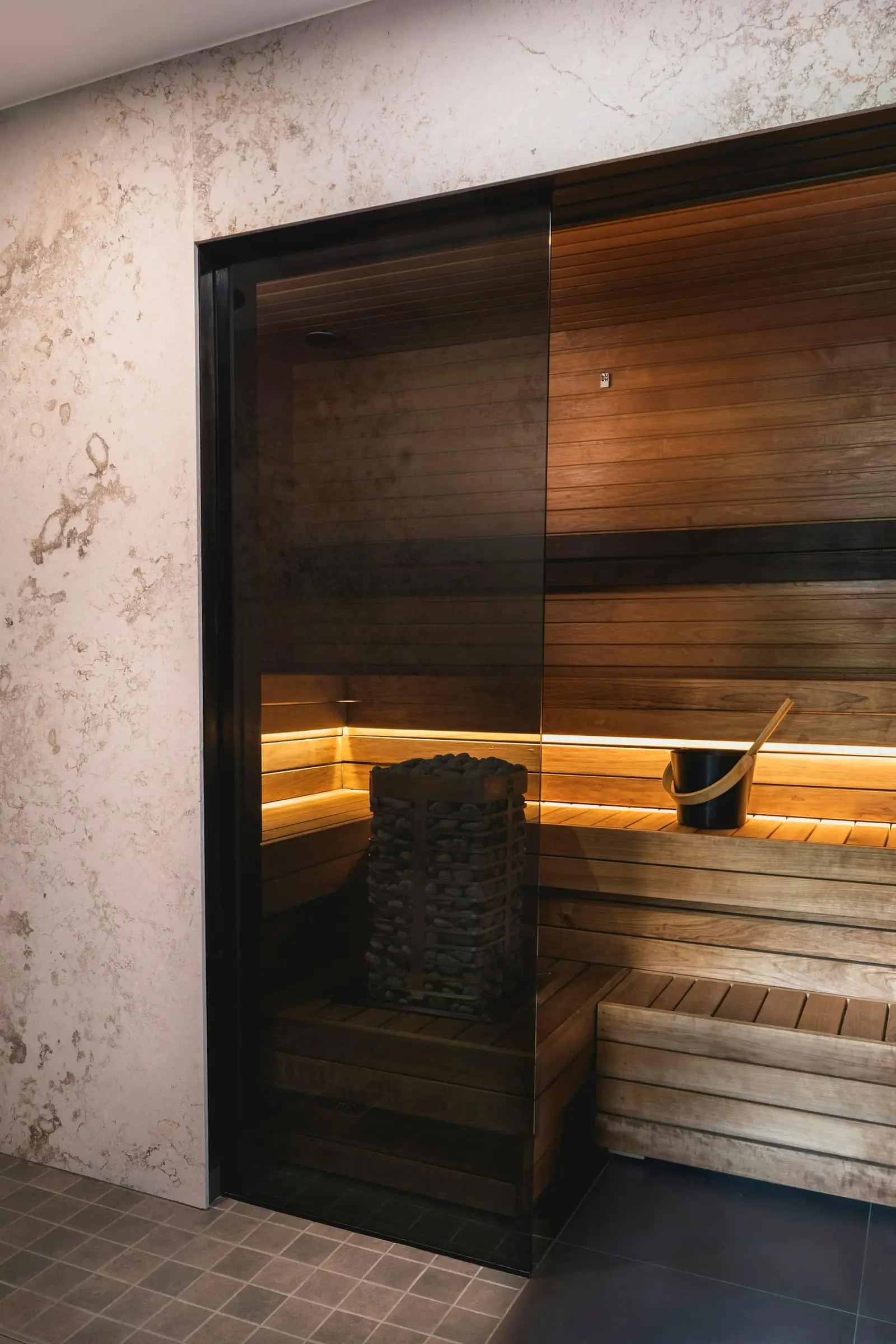
Buying a home sauna is the big decision. Using it well is the part that decides whether it becomes a habit or an expensive storage cabinet.
This article covers your first weeks: how long to stay in, how often to go, and when to skip a session. For choosing the sauna itself, see the home sauna buying guide.
Short answer: start with about 5 minutes, add time each session, and work up to around 15–20 minutes. Drink water afterward, skip the sauna after alcohol, and check with your doctor first if you have a health condition.
How long to stay in
Cleveland Clinic suggests beginners start with about 5 minutes and add time each session, keeping sessions to around 15–20 minutes once you’re used to it.
Infrared runs cooler, but the advice is similar. Cleveland Clinic suggests starting at around 110°F for 5–10 minutes and keeping infrared sessions under 30 minutes, even when you’re experienced.
Get out if you feel dizzy, sick, or unwell. There’s no prize for staying in.
How often to go
Cleveland Clinic’s infrared guidance suggests three or four sessions a week.
You may have read that frequent sauna use is linked to better heart health. That comes from a Finnish study of 2,315 men followed for about 21 years (Laukkanen et al., JAMA Internal Medicine, 2015). Compared with one session a week, men who used a sauna 4–7 times a week had a 63% lower risk of sudden cardiac death. It’s an observational study, so it shows an association, not proof that the sauna caused it.
Hydration
You sweat a lot in a sauna. Cleveland Clinic recommends drinking plenty of water, or an electrolyte drink, afterward.
When to skip a session
Cleveland Clinic says to avoid the sauna if you’ve had a recent heart attack or stroke, or if you’ve been drinking alcohol.
It also lists people who should talk to a healthcare provider before starting:
- People over 65 or under 16
- Anyone pregnant or trying to conceive
- People with heart conditions or neurologic conditions such as epilepsy
- Anyone taking medication
Start on the lower bench
In a traditional sauna, where you sit changes the temperature more than the dial does. Harvia’s heater manual gives an example: when the air above the heater reads 180°F, it is about 140°F at the upper bench and about 120°F at the lower bench.
So for a first session, sit low. You get a 20°F gentler start without touching the controls. Move up a bench when the lower one feels easy.
Give it time to heat
Harvia says to allow at least 30 minutes for the room to reach an average sauna temperature. Getting in early is fine, and the lower temperature makes a mild first round. Infrared cabins work differently: the panels warm you directly, so you can get in while the cabin warms.
Time it without a phone
Minutes are hard to judge in the heat, and phones aren’t made for sauna temperatures. A sand timer solves it. The Harvia Sand Timer runs for 15 minutes and costs $22.70. For a 5-minute first session, leave when about a third of the sand has fallen.
Harvia’s manual sets its own ceiling: don’t exceed 30 minutes in the sauna at one time, and don’t treat it as an endurance test.
Set up before you go in
- A towel to sit on. It keeps sweat off the bench.
- A second towel and a robe outside the door.
- Water to drink afterward.
- The timer where you can see it from your seat.
- Nothing on or over the heater.
Water on the stones
In a traditional sauna, a ladle of water on the stones makes the room feel much hotter for a minute or two. For your first sessions, try one ladle and see how it feels before adding more. Use clean tap water only. Harvia warns that pool or spa water on the stones can produce chlorine gas.
After the session
Cool down gradually, sit for a few minutes, and drink water. If you feel light-headed when you stand, sit back down and wait. Then leave the door open for a while so the room dries.
A simple first-month routine
- Week 1: 5 minutes, then cool down and drink water.
- Weeks 2–3: add a few minutes each session as it feels comfortable.
- Week 4: settle around 15–20 minutes (under 30 for infrared), three or four times a week.
If you are still choosing a cabin, model picks are in our home sauna comparison.
Bottom line: go short and build up. A comfortable 15-minute habit beats one heroic session you never repeat.
This article is general information, not medical advice.
Sources
- Cleveland Clinic, “Get Your Sweat On: The Benefits of a Sauna,” August 12, 2024: health.clevelandclinic.org
- Cleveland Clinic, “Why Infrared Saunas Are ‘Cooler’ Than Traditional Saunas,” April 14, 2022: health.clevelandclinic.org
- Laukkanen T, Khan H, Zaccardi F, Laukkanen JA. “Association Between Sauna Bathing and Fatal Cardiovascular and All-Cause Mortality Events.” JAMA Internal Medicine, 2015;175(4):542–548: jamanetwork.com
- Harvia, KIP electric sauna heater owner’s/operator’s manual (North America), September 17, 2015: almostheaven.net
- Harvia 15-minute sand timer listing (duration, price), checked September 2026